
Does the Same Company Own PSA, BGS, and SGC? (What It Means for Collectors in 2026)
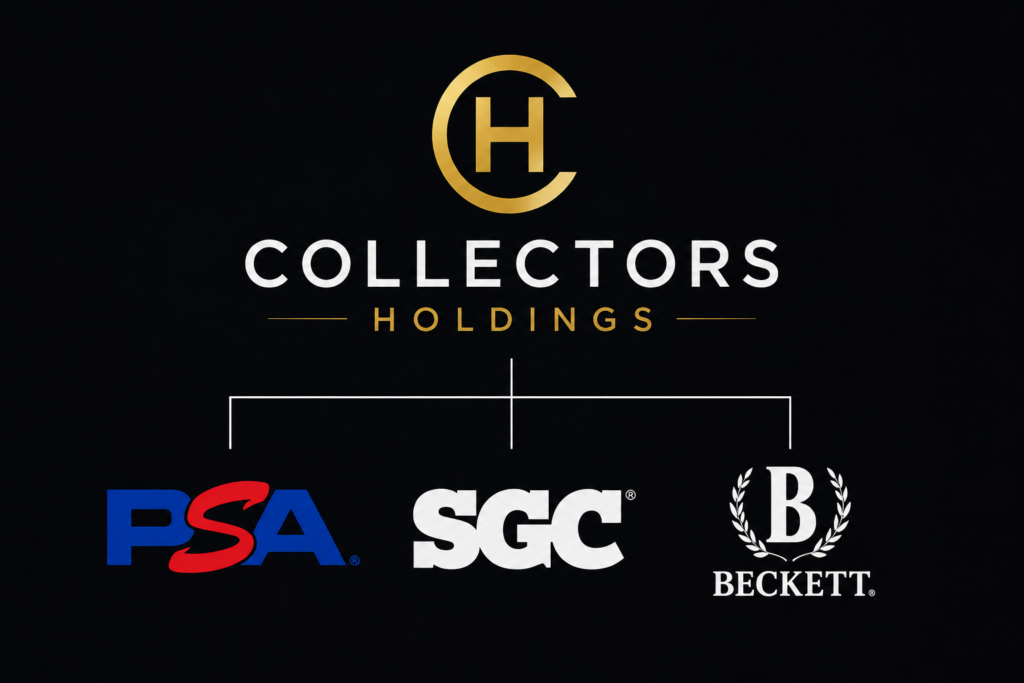
For years, collectors viewed Professional Sports Authenticator, Beckett Grading Services, and Sportscard Guaranty as direct competitors.
Each company developed its own grading standards, slab designs, and collector following.
But the grading landscape has changed dramatically in recent years.
Does the same company now own PSA, BGS, and SGC?
In this guide, we’ll break down who owns the major grading companies, how the industry changed, and what it could mean for collectors moving forward.
Quick Answer: Who Owns PSA, BGS, and SGC?
As of 2026, Collectors Holdings owns PSA and SGC and has entered into an acquisition agreement for Beckett Grading Services (BGS).
This consolidation has sparked significant debate throughout the hobby, with collectors discussing competition, grading consistency, pricing power, and the future of the grading industry.
Who Is Collectors Holdings?
Collectors Holdings has become one of the most influential companies in the collectibles industry.
The company owns several major authentication and grading businesses, including:
- PSA
- SGC
- WATA Games
Collectors has expanded aggressively through acquisitions and investments across the collectibles space.
Important: Many collectors still associate Goldin with Collectors, but eBay acquired Goldin in 2024.
When Did Collectors Acquire PSA, SGC, and BGS?
The consolidation of the grading market happened over several years.
Grading Company Ownership Timeline
| Company | Acquisition Timeline |
|---|---|
| PSA | Under Collectors ownership since 2021 |
| SGC | Acquired February 2024 |
| BGS (Beckett) | Acquisition agreement announced December 2025 |
The Beckett acquisition generated significant discussion throughout the hobby because PSA, SGC, and BGS were historically viewed as the three largest competing grading companies.
Important: As of the latest publicly available reports in 2026, the Beckett acquisition agreement had been announced but had not yet formally closed.
Why Are Collectors Talking About This?
The consolidation of grading companies has become one of the most debated topics in sports card collecting.
Many hobby participants are asking whether fewer independent grading companies could reduce competition and increase pricing power.
Industry reporting and legal filings have suggested that PSA, SGC, and BGS together account for roughly 80% of the grading market, making the ownership structure particularly significant.
Common concerns include:
- reduced competition
- pricing power
- market consolidation
- grading innovation
- long-term hobby influence
Others believe larger ownership groups can provide:
- improved technology
- stronger infrastructure
- operational efficiencies
- faster turnaround capabilities
Why Is There Antitrust Scrutiny?
The grading industry debate has expanded beyond hobby forums and social media.
In 2026:
- A class-action lawsuit was filed challenging the consolidation of major grading companies.
- Congressman Pat Ryan publicly requested an FTC review of the grading industry structure.
Supporters of increased scrutiny argue that fewer independent grading companies could limit competition and consumer choice.
Others argue that collectors still have multiple grading options available and that ownership alone does not determine grading quality or market value.
At this stage, the long-term impact remains uncertain.
Will PSA, BGS, and SGC Stay Different?
Even under common ownership, PSA, BGS, and SGC continue to operate as separate brands.
Each company maintains:
- unique slab designs
- different grading philosophies
- distinct collector audiences
- separate brand identities
Collectors still generally associate:
- PSA with market value and liquidity
- SGC with vintage cards and value-focused submissions
- BGS with premium modern cards and subgrades
Whether these distinctions remain over the long term is something many hobby participants are watching closely.
Have Collectors Noticed Changes Since the Acquisitions?
The hobby has closely watched developments following recent acquisitions.
Some collectors have expressed concerns about:
- service consistency
- turnaround times
- grading standards
- future competition
Following the SGC acquisition, some hobby participants noted leadership changes and shifts in service levels. Others believe integration under a larger company could ultimately improve infrastructure and resources.
As with many acquisitions, long-term effects may take years to fully evaluate.
What Does This Mean for Resale Value?
Ownership does not automatically change market value.
At the moment:
- PSA continues to command the strongest resale premiums in most categories.
- BGS remains respected for high-grade modern cards and Black Label grades.
- SGC continues to perform well for vintage cards and value-focused submissions.
Collectors still make grading decisions based on:
- resale value
- turnaround time
- grading philosophy
- slab appearance
- personal preference
👉 Read: PSA vs SGC
👉 Read: PSA vs SGC vs BGS
Are There Still Independent Alternatives?
While Collectors now controls much of the grading market, collectors themselves still have alternative options.
Notable independent grading companies include:
- TAG Grading
- Certified Guaranty Company
CGC remains one of the largest independent grading companies operating today.
TAG has gained attention for:
- AI-assisted grading
- detailed grading reports
- transparency
- modern slab design
For collectors seeking alternatives outside the Collectors ecosystem, CGC and TAG remain notable options.
Could This Help TAG Grow?
Some collectors believe industry consolidation could create opportunities for newer grading companies.
As collectors explore alternatives, interest in companies such as TAG has increased.
Collectors interested in:
- grading transparency
- AI-assisted grading
- detailed defect reporting
- technology-driven consistency
may continue exploring newer entrants into the market.
👉 Read: TAG Review
👉 Read: TAG vs PSA
Should Collectors Be Concerned?
That depends on your perspective.
Some collectors are concerned about reduced competition and increased market concentration.
Others focus more on practical questions such as:
- turnaround times
- grading consistency
- customer service
- resale value
For most collectors, choosing the grading company that best fits their goals remains more important than ownership structure alone.
Final Thoughts
The grading landscape is changing rapidly.
With PSA, SGC, and BGS now operating under the Collectors umbrella, many collectors are watching closely to see how competition, pricing, and grading standards evolve in the coming years.
Regardless of ownership, collectors continue to focus on the same questions:
Which company offers the best value, the most consistent grading, and the strongest market confidence?
Next Step
Still deciding which grading company is right for your cards?